

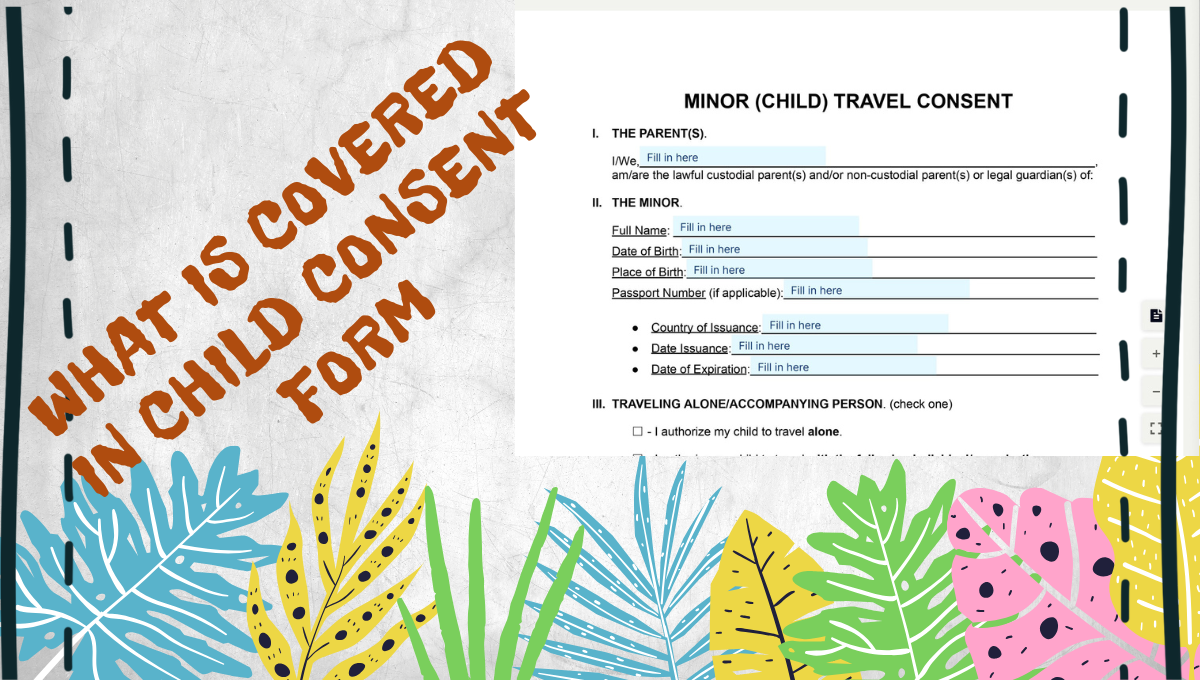
Traveling with children is both joyful and stressful at the same time. When the trip involves a minor who will be traveling without one or both parents, or with an adult who is not the legal guardian, the paperwork matters as much as the packing. In the United Arab Emirates, authorities, airlines, and foreign immigration officers look for clear written permission from parents or legal guardians to prevent child abduction and fraud. This article explains, in plain language, what a child travel consent form in the UAE should contain, when it is required, how to get it notarized and legalized, what airlines expect, and how to avoid common problems at the border.
What is a child travel consent form, and why does it matter
A child travel consent form is a written declaration from the child’s parent(s) or legal guardian(s) that authorizes a minor to travel with a specified adult or alone, and gives details about the trip. Its purpose is to prove to immigration officers, airlines, and authorities at both origin and destination that the travel has parental approval and is not the result of an abduction or custody dispute. Airlines and border control officers around the world often ask for this document when a child is traveling with only one parent, a guardian, or a third party. In the UAE, such consent documents are widely recommended and routinely requested by carriers to protect the child and the traveling adults. Evidence from airline guidance and local notary services shows that presenting a clear consent letter or a power of attorney removes doubt and speeds passage through immigration checks.
ALSO READ: https://travelstodubai.com/backpack-travel-guide-how-to-pack/
When you need a child travel consent form in the UAE
You should prepare a consent form whenever a child under 18 travels without both parents present. Typical situations include a child flying with a single parent while the other parent remains in the UAE, a child traveling with relatives or friends, students traveling for study trips, or when a legal guardian accompanies the child instead of a parent. Some countries and airlines will require consent even when a parent is travelling with the child if the child’s name differs from the parent’s in passport records or if custody arrangements are not clear. Because rules can vary by airline, by destination, and by country of the child’s nationality, it is safest to have a properly completed and notarized consent document whenever there is any possibility of question.
What to include in the consent form: the essential elements
A legally useful consent form contains precise information so authorities can verify identity and intent. The document should show the child’s full legal name, date and place of birth, passport number, and nationality, and any residency ID such as an Emirates ID. It must identify both parents or legal guardians with full names, contact details and passport or ID numbers. The travel details need to be specific: destination, departure and return dates, airline and flight numbers if known, purpose of travel, the name of the accompanying adult and their relationship to the child, plus a clause stating parental consent to the travel and to emergency medical treatment if required. If only one parent is signing, the form should explain why the other parent is not present or why consent is being granted by a single guardian. Many local notaries and legal services provide templates that include all required fields so nothing is accidentally left out.
Notarization and legalization: extra steps that make the document stronger
A handwritten or printed consent letter may be acceptable in some situations, but notarization adds legal weight and makes it easier for immigration officers to trust the document. In the UAE, parents typically sign the consent letter in front of a notary public, who verifies identity and adds an official stamp. For travel to some countries, consular legalization or an apostille (if the destination accepts apostilles) may be necessary to make the document valid abroad. If the child or accompanying adult is traveling to a nation that requires additional authentication, you will need to check embassy or consulate requirements and obtain the correct legalization before departure. Getting the consent notarized and, when necessary, legalized at the relevant embassy reduces the chance of delays, refusals or lengthy secondary interviews.
Power of attorney vs. parental consent letter: when to use each
Parents sometimes ask whether they need a simple parental consent letter or a formal power of attorney (POA). A concise consent letter suffices for most short trips and for airline checks when both parents are alive and accessible. A POA is a stronger legal instrument that grants authority to the person traveling with the child to act on behalf of the parent in specific matters, such as obtaining medical care, applying for visas, or handling administrative issues abroad. If the trip includes long stays, extended guardianship arrangements, or if the accompanying adult needs authority to make legal or medical decisions, parents should consider executing a limited POA for travel. Consult a UAE notary or family lawyer to match the document to your exact needs.
Airlines and airports: what to expect at check-in and immigration
Airlines have their own procedures and forms for minors traveling alone or with someone other than a parent. Many carriers require a completed minor consent form during check-in and will refuse boarding without it. Immigration officers may also request proof of a child’s family relationship, such as a birth certificate, when the child’s last name differs from the accompanying adult’s. To prevent last-minute stress, present the consent letter, the child’s passport, and any additional ID at check-in and keep digital and printed copies on hand throughout the journey. Because airlines are risk-averse, following their specific requirements can mean the difference between a smooth departure and a denied boarding.
Legal risks and penalties for unauthorized travel with a minor
The UAE has tightened protections to prevent unauthorized travel with minors. Traveling with a child without the required consent of both parents or of the legal guardian can expose the traveling adult to civil or criminal consequences, fines and detention in extreme cases. Federal legislation and updated family law provisions enable guardians to seek court orders and to restrict travel in custody disputes. If either parent objects or if there is ambiguity about custody rights, the safest course is to obtain a court order or written consent from the other parent before travel. Avoiding legal risk starts with transparent documentation and, where required, court permission.
Practical steps to prepare a child travel consent form in the UAE
Start by collecting the child’s passport, Emirates ID and birth certificate, plus copies of both parents’ passports or IDs. Draft the consent letter using a clear template that contains the required elements described earlier. Sign the letter in front of a UAE notary public and obtain the notary’s stamp. If traveling internationally and the destination requests legalization, contact the destination country’s embassy in the UAE to confirm whether legalization or an apostille is needed. Make multiple printed copies and store a PDF in your email and cloud storage so you can share it quickly if requested by officials. Keeping emergency contact numbers and a brief medical authorization clause within the letter helps protect the child if an unexpected situation arises.
Common mistakes that cause delays
Many families lose time at the airport because their consent letter omits critical details, lacks notarization, or is signed by only one parent without explanation. Another frequent problem is not matching the name formats exactly as they appear on passports. A difference in middle names, order of surnames, or the use of nicknames can trigger extra scrutiny. Relying on a handwritten short note rather than a properly formatted consent document or failing to carry the child’s birth certificate can also create problems. To avoid these issues, use templates supplied by reputable notary services or embassies and double-check that all names and numbers match official documents.
Tips and tricks for stress-free travel
Before booking, call the airline and confirm their specific requirements for minors and consent letters. If the child’s surname differs from the accompanying adult’s, carry a birth certificate or family book to demonstrate the relationship. Have both parents sign and notarize consent letters when possible because dual signatures leave little room for dispute. If only one parent is available to sign, include a short explanation of the other parent’s absence and any supporting documents, such as custody orders or death certificates if applicable. Store digital scans of the notarized consent letter and key IDs in a cloud folder that is accessible to both parents and the accompanying adult. If travel plans include multiple countries, check embassy guidance for each destination about legalization or apostille requirements to avoid surprises. Finally, arrive early at the airport; immigration lines and extra checks are easier to manage with time on your side.
Sample scenario: child traveling with a grandparent
Imagine a child under 18 traveling with a grandparent from Dubai to visit family overseas for three weeks. The parents sign a detailed consent letter identifying the child, the grandparent, travel dates, flight numbers, and include a medical authorization clause. The parents sign the letter before a notary and carry copies of the child’s and grandparent’s passports and the child’s birth certificate. At the airline check-in and at immigration, the documents are presented. Because everything is complete and notarized, the process goes smoothly and the family avoids delays or further questioning.
When to consult a lawyer
If custody arrangements are complex, if one parent objects, if the child is subject to a court order, or if the trip involves long-term guardianship or relocation, consult a family lawyer experienced in UAE law. Legal counsel can draft stronger instruments, such as a travel POA, or obtain court permission when one parent refuses consent. Lawyers also advise on international legalization needs and represent parents in court applications where custody conflict threatens travel plans. Seeking help early prevents rushed, inadequate paperwork and protects the child and accompanying adult.
Frequently asked questions
How old must a child be before no consent letter is required for travel from the UAE?
Different countries and airlines set their own age thresholds, but generally, once a traveler is an adult under the law of their nationality—commonly 18—parental consent is not required. Airlines sometimes have specific rules for unaccompanied minors under certain ages. Always verify the airline and destination country requirements before traveling.
Do both parents have to sign the consent form?
When both parents are alive and share parental responsibility, having both signatures reduces the chance of challenge. If only one parent signs, include an explanation and supporting documents such as sole custody orders. A notarized single-parent consent may suffice in many cases, but dual signatures are safest.
Does a consent letter need to be translated?
If the destination country requires documents in a language other than English or Arabic, you may need a certified translation and possibly legalization of that translation. Check embassy guidance for translation requirements.
Can a simple handwritten note work as consent?
Airlines and immigration prefer formally worded consent letters or notarized documents. A simple handwritten note increases risk of questions or refusal. Use a clear template and notarize the document to avoid delays.
What happens if a parent objects at the border?
If a parent objects to a child’s travel, immigration authorities may intervene, request court orders, or prevent the child’s departure until the dispute is resolved. In such cases, court permission, mediation or legal representation may be required. Avoid this by securing clear consent before travel.
Where can I get a template or official form in the UAE?
Notary offices, reputable notary service websites, and some airline pages provide templates for parental consent letters and child travel POAs. For travel involving embassies or long stays, contact the destination embassy for any required form or legalization instructions.
Final checklist before you leave
Gather passports, Emirates ID, and birth certificate, prepare the consent letter with full travel details, have parents sign in the presence of a UAE notary, obtain legalization or apostille if required by the destination, carry multiple printed copies and keep digital backups, and confirm airline-specific minor travel policies before check-in.
Preparing a clear, notarized child travel consent form in the UAE prevents delays, protects the child and gives peace of mind to parents and guardians. The extra care you take with documentation before departure means less stress at the airport and more time enjoying the journey with your child.