

Why a Travel Dua Matters
Travel is more than movement from one place to another. For Muslims, every departure and return is an opportunity to remember God, seek protection, and ask for goodness. The travel dua (دعاء السفر) is part of the prophetic etiquette for journeys: it centers the heart, invites divine protection, and reminds the traveler of human limitation and God’s sovereignty. Whether you’re stepping on a plane, boarding a bus, or setting out on a long drive, these supplications connect the practical with the spiritual and bring calm to anxious moments. Reliable sources record specific supplications the Prophet ﷺ used when embarking on travel and when returning home, making them both devotional and rooted in the Sunnah.
What the Sunnah Teaches About Supplication on Travel
When the Prophet ﷺ mounted for travel he would praise Allah, recite the verse acknowledging God’s power over what He has made subservient to us, and then make a travel-specific dua asking for righteousness, ease, and safety. The recorded text begins with glorification and then continues with a concise, heartfelt petition: asking for piety in the journey, that the travel be made easy, and that the distance be shortened. It also contains an explicit refuge-seeking portion, asking protection from the hardships of travel, distressing sights, and harmful outcomes concerning wealth and family. These words have been preserved in hadith collections and later classical works of etiquette and supplication.
ALSO READ: https://travelstodubai.com/staff-travel-flydubai-crew-discounts-standby/
The core travel dua (text and meaning)
The travel dua commonly recited in Arabic is:
اللَّهُمَّ إِنِّي أَسْأَلُكَ فِي سَفَرِي هَذَا الْبِرَّ وَالتَّقْوَى، وَمِنَ الْعَمَلِ مَا تَرْضَى، اللَّهُمَّ هَوِّنْ عَلَيْنَا سَفَرَنَا هَذَا وَاطْوِ عَنَّا بُعْدَهُ، اللَّهُمَّ أَنْتَ الصَّاحِبُ فِي السَّفَرِ، وَالْخَلِيفَةُ فِي الْأَهْلِ، اَللّٰهُمَّ إِنِّي أَعُوْذُ بِكَ مِنْ وَعْثَاءِ السَّفَرِ، وَكَآبَةِ الْمَنْظَرِ وَسُوْءِ الْمُنْقَلَبِ فِي الْمَالِ وَالْأَهْلِ.
The meaning captures four linked requests: ask for righteousness and actions pleasing to God; ask that the journey be easy and the distance feel shorter; affirm that God will accompany and safeguard family; and seek refuge from travel’s difficulties and misfortunes. Saying these words frames the trip as a domain where faith and trust meet practical precautions.
Short Qur’anic and Prophetic Reminders to Say When You Travel
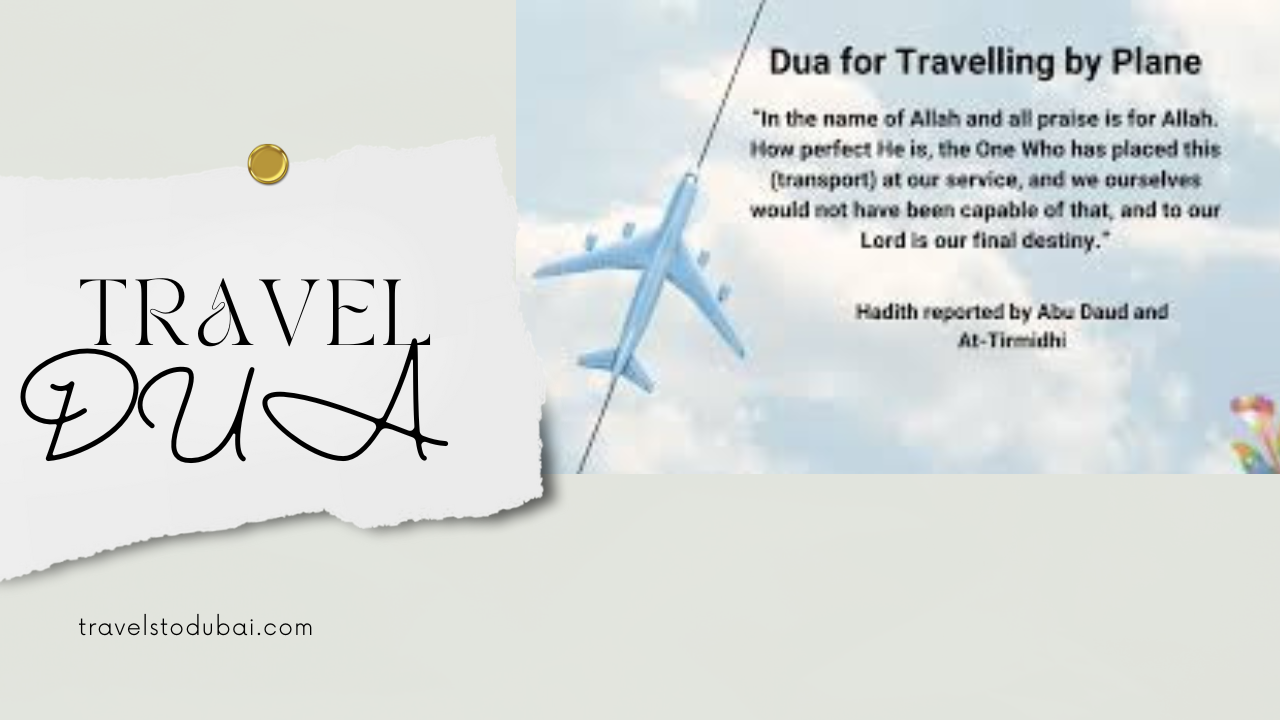
Before or during travel it is recommended to begin with Bismillah and to remember the verse used by the Prophet: “Subḥānalladhī sakhkhara lanā hādhā wa mā kunnā lahū muqrīnīn. Wa innā ilā rabbina lamunqalibūn.” (Glory be to Him who has made this subservient to us; and we were not able to do this by ourselves. And to our Lord we will surely return.) This recognition both expresses gratitude and humility, and it directly appears in the travel ritual of the Prophet. In addition, there are short, practical duas such as the one taught for safe landing or arrival: “Rabbī anzilnī munzalan mubārakan wa anta khayrul munzilin” (My Lord, land me at a blessed landing and You are the best of those who bring to land), which is appropriate when arriving after sea travel or sometimes adapted for landing by plane. These concise phrases fit easily into the rhythm of modern travel.
How to Use Travel Duas Practically
Recite the travel dua after praising Allah and after saying Bismillah, ideally while preparing to set off or just as the vehicle begins to move. If driving, it may be said before starting the engine, and if on public transport, it can be recited inwardly until privacy allows outward vocalization. The travel dua is not a formula that replaces planning and safety measures. Rather it complements them: check your passport, secure luggage, follow safety regulations, and at the same time place trust in God through supplication. Many travelers find that repeating short protective phrases during cramped or anxious moments helps calm nerves and keeps focus on gratitude. Finally, upon return, the Prophet ﷺ advised returning with praise, repentance, and renewed worship, turning the journey into a spiritual cycle that starts and ends with remembrance.
travel agency with tabby payment
If you run or use a travel agency that offers modern conveniences such as instalment payments (for example Tabby or similar buy-now-pay-later services), combining practical travel planning with spiritual preparation is straightforward. Before confirming bookings or handing over payment, make dua for halal provision, an easy journey, and the wellbeing of those traveling. Financial ease can be prayed for explicitly in the same spirit as the travel dua, seeking lawful, manageable means and protection from regret or loss. Remember that dua and due diligence, reading terms, ensuring refunds and insurance, work hand in hand. (This heading shows how spiritual practice and modern travel services can coexist; always read terms and keep records when using financial services.)
Spiritual Benefits of Making Travel Dua
Supplicating before and during travel transforms the journey into an act of worship. It trains the traveler’s heart to rely on God, cultivates gratitude for means of transport that many take for granted, and invites humility by reminding us of our dependence on divine protection. Duas also help maintain moral focus: asking explicitly for deeds that please God keeps behavior upright while away from home. Travelers often report that consistent remembering of God reduces anxiety, fosters patience during inconvenience, and encourages kindness to fellow passengers, practical effects linked to the inner work of supplication.
Tips and Tricks for Memorizing and Using Travel Duas
Start with short parts. Learn the opening lines and the refuge portion first; these are easy to memorize and cover core needs. Repeat the Arabic with an accurate transliteration until the words feel natural, then learn the meaning so the dua becomes heartfelt rather than mechanical. Keep a small printed card or a notes entry on your phone with the dua in Arabic and your language translation for quick review. Recite the dua quietly if the setting requires, and use the brief Qur’anic phrases when privacy or noise makes longer supplications difficult. Finally, pair the dua with small practical acts: locking luggage, checking travel documents, and setting reminders. The dua’s spiritual protection complements these sensible measures.
Common Mistakes and How to Avoid Them
One common mistake is treating the supplication as a superstition or a “magical phrase.” The travel dua is an invitation to remember God and take responsibility; it does not guarantee outcomes independent of practical safety. Another error is reciting without knowing the meaning. Learning what the words mean allows the supplication to transform emotions rather than remain rote. A third trap is neglecting the return supplication; the prophetic tradition emphasizes praise and repentance upon return, completing the spiritual circle of travel. Balance spiritual practice with careful planning and lawful conduct to get the full benefit of both worlds.
Stories of Comfort: How Dua Helped Travelers
Across cultures, Muslim travelers share simple stories where reciting the travel dua lessened panic during delays, gave perspective during unexpected problems, or helped travelers sleep calmly on long flights. While anecdotal, these consistent testimonies point to the dua’s psychological effect: it channels fear into submission and prompts constructive action rather than passive worry. Many pilgrims and frequent flyers incorporate the dua into their checklists and credit the practice with making journeys more meaningful and manageable. These personal accounts echo the Prophetic teaching that turning to God at crucial moments brings relief and guidance.
Q 1: What exactly is the “travel dua” and where does it come from?
The travel dua is a supplication the Prophet ﷺ used when setting out on a journey. It is recorded in hadith collections and later works on etiquette. The text combines praise, petition for piety and ease, and seeking refuge from travel’s trials.
Q 2: When should I recite the travel dua, before leaving home or when the journey starts?
It is best to praise Allah and say Bismillah before departure, then recite the travel dua either just before you leave or as the vehicle begins to move. The Prophet’s practice included short praises and the specific supplication during the mounting or departure moment.
Q 3: Can I say the travel dua silently or should I say it aloud?
Both are acceptable. Say it aloud if circumstances and manners allow; otherwise recite it silently. The intention and the meaning matter most. If noise or privacy is a concern, internal recitation is perfectly fine.
Q 4: Is there a dua for landing or arriving safely?
Yes. A brief dua commonly used when arriving by sea (and adapted by many travelers for arrival generally) is “Rabbī anzilnī munzalan mubārakan wa anta khayrul munzilin” (My Lord, land me at a blessed landing; You are best of those who bring to land). The Qur’an records this invocation in the story of the believers who asked for blessed land.
Q 5: Do travel duas replace travel insurance and safety checks?
No. Duas complement, not replace, practical measures. Good planning, insurance, and following safety rules remain essential. The dua brings spiritual calm and reliance on God while you practice sensible precautions.
Q 6: What should I recite when returning home?
Upon return it is recommended to praise and thank Allah, repent, and renew worship. The prophetic practice includes returning with gratitude and asking protection and forgiveness, completing the cycle of leaving and coming back to Allah’s care.
Q 7: Can non-Arabic speakers use translations instead of Arabic?
Yes. While Arabic preserves the original phrasing of the Sunnah, the sincerity of the heart matters most. Learning the Arabic is meritorious, but reciting in your own language is acceptable until you memorize the original.
Conclusion: Travel with Preparation and Prayer
Travel dua is a small spiritual habit with large effects. It reorients the traveler toward gratitude, protection, and ethical behavior, while also offering psychological calm. Rooted in authentic texts, these supplications are short, memorable, and easy to integrate into modern journeys. Pair them with practical safety and financial prudence, and let each trip become a chance to grow spiritually as well as experientially. Safe travels, and may each journey bring you back wiser, grateful, and closer to what matters.